Pitted Dried Cherries
Pitted dried cherries are convenient for porridge, baking, fruit drink blends, and homemade snacks. The key in this recipe is not to chop the berries, but to prepare them properly, let the juice drain, and dry them to a chewy or fully dry texture depending on how you plan to use them.
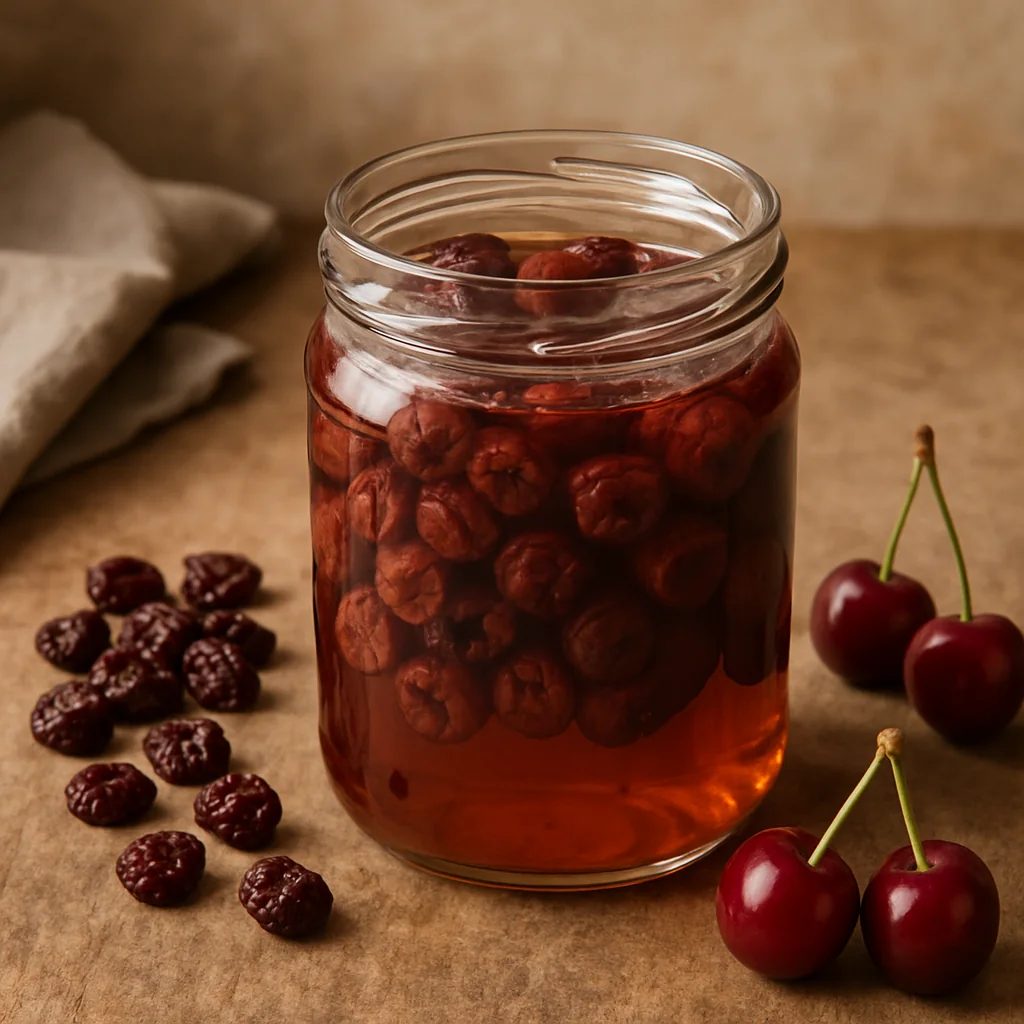
Pitted dried cherries for convenient everyday use.
What you will need
Below is the ingredient list for this recipe with the base proportions. It is convenient to prepare everything you need in advance so the cooking process goes more smoothly and without rushing.
There is 1 item in the list. It is convenient to check that everything is ready first and only then move on to the cooking steps.
- Cherries2 kg
How to make it
The recipe is broken down into clear steps so it is easy to follow right in the kitchen. Move through them in order to keep the process under control and avoid missing important details.
This recipe has 5 steps. It is easiest to follow them in order without jumping between stages.
Sort and wash the cherries
Choose ripe but firm cherries with no spoiled spots. Rinse them quickly and let the water drain well in a colander.
Remove the pits
Carefully remove the pits, trying to keep the cherries in halves or whole. There is no need to cut them into smaller pieces.
Blot excess juice
Place the prepared cherries cut side up on a paper towel for 10–15 minutes. This helps them dry more evenly and reduces excess dripping on the trays.
Arrange on the trays in a single layer
Arrange the cherries in a single layer, leaving small gaps between the berries. Do not pile them up, otherwise the lower layer will dry more slowly.
Dry to the desired texture
Dry at a moderate temperature until the cherries no longer release moisture when pressed. For snacking, they can be left slightly softer; for long storage, dry them almost completely.