Pitted Dried Cherries
Pitted dried cherries are convenient for porridge, baking, fruit drink blends, and homemade snacks. The key in this recipe is not to chop the berries, but to prepare them properly, let the juice drain, and dry them to a chewy or fully dry texture depending on how you plan to use them.
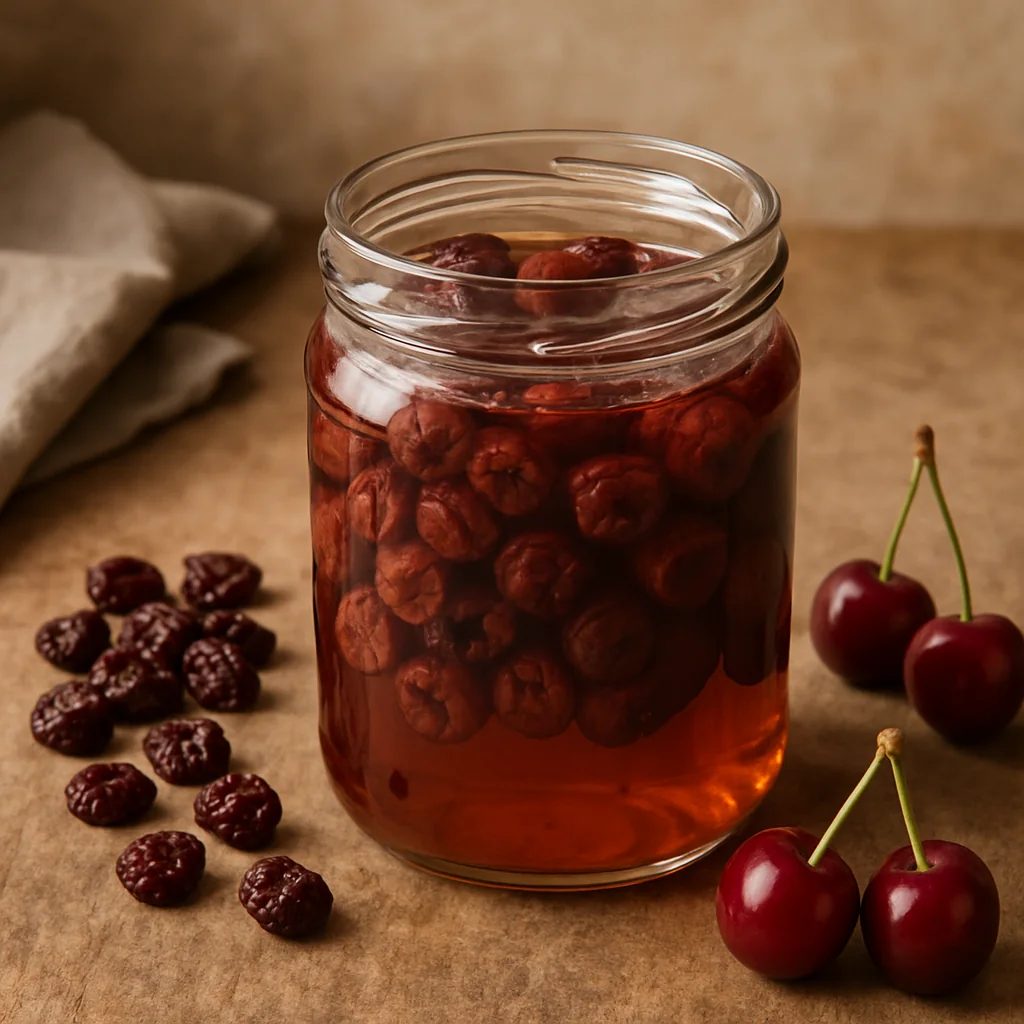
Pitted dried cherries for convenient everyday use.
What you will need
Below is the ingredient list for this recipe with the base proportions. It is convenient to prepare everything you need in advance so the cooking process goes more smoothly and without rushing.
There is 1 item in the list. It is convenient to check that everything is ready first and only then move on to the cooking steps.
- Cherries2 kg
How to make it
The recipe is broken down into clear steps so it is easy to follow right in the kitchen. Move through them in order to keep the process under control and avoid missing important details.
This recipe has 5 steps. It is easiest to follow them in order without jumping between stages.
Sort and wash the cherries
Choose ripe but firm cherries with no spoiled spots. Rinse them quickly and let the water drain well in a colander.
Remove the pits
Carefully remove the pits, trying to keep the cherries in halves or whole. There is no need to cut them into smaller pieces.
Blot excess juice
Place the prepared cherries cut side up on a paper towel for 10–15 minutes. This helps them dry more evenly and reduces excess dripping on the trays.
Arrange on the trays in a single layer
Arrange the cherries in a single layer, leaving small gaps between the berries. Do not pile them up, otherwise the lower layer will dry more slowly.
Dry to the desired texture
Dry at a moderate temperature until the cherries no longer release moisture when pressed. For snacking, they can be left slightly softer; for long storage, dry them almost completely.
What else to try in this subcategory
After one successful recipe, it is often useful to open a few similar ones and get a better feel for how this drying category works.
Dried Melon Slices
Dried melon slices make a naturally sweet snack without added sugar.
Dried Raspberries
Dried raspberries keep the aroma of summer and work well for tea, porridge, desserts, and homemade mixes.
Dried Strawberries
Homemade dried strawberries with an emphasis on flavor, texture, and convenient storage.
Dried Blueberries
Dried blueberries are a compact and convenient berry preserve.
What else works well next to this recipe
A dehydration recipe works best alongside the broader dehydration section, drying problems, guides on storage, and the nearby topic pages connected to the same pantry direction.
Return to the main drying section with all major directions: fruit leather, dried fruit, vegetables, mushrooms, herbs, and greens.
Useful when the result turns sticky, under-dried, over-dried, or unstable in storage.
Explanations about doneness, temperature, storage, and getting more stable results.
Broader topics that connect naturally to this recipe
A dehydration recipe is often only one part of a broader subject: fruit leather, herb drying, homemade teas, or seasonal harvest processing. These pages help you move further without random searching.
Homemade Herbal Teas
Herbal teas, drying, dandelions, pine cones, and other aromatic home scenarios where dehydration naturally leads into a broader topic.
Herbs for Drying
Mint, lemon balm, thyme, basil, and other herbs for people who want a broader view of drying and later pantry use.
Fruit Leather and Fruit Rolls
A topic where recipes, layer thickness, drying, and finished texture all matter together.
What deserves attention
In dehydration, layer thickness, full drying, proper cooling before storage, and stable dry storage all matter. If the result seems doubtful, it is worth checking the drying problem pages before keeping it long term.